A buyer under contract on a 1920s bungalow in West Wash Park gets the inspection report back and skips straight to the sewer scope video. The roof is fine. The furnace has ten years left in it. Then the technician's narration hits a joint forty feet from the cleanout: root hair, then root mass, then a section of clay pipe that has sagged into what plumbers call a belly. That single finding, not the fourteen-page list of cosmetic items above it, is what determines whether this deal closes on schedule or gets renegotiated at the table.
That scene is becoming common again across Denver's older neighborhoods, and the reason has less to do with the pipes themselves than with what changed in the market around them. The pipes have been failing the same way for decades. What is new in 2026 is that buyers finally have the leverage to do something about it when they find a problem, which means the sewer scope has quietly become the highest-stakes line item in a Denver inspection.
The pipe in the ground tells you the decade the house was built
Denver's oldest neighborhoods carry their construction history underground as much as they do in their architecture. In Baker and Capitol Hill, where the housing stock leans heavily on 1940s-era construction, cast iron is common, and it fails by corroding and scaling from the inside until it snags toilet paper and slows every drain in the house. In Park Hill, the Highlands, and Washington Park, where bungalows and Denver Squares went up between 1900 and 1940, original clay tile is still common, and it fails at the joints, where mature silver maples and cottonwoods planted decades ago have had all the time in the world to find a crack and force their way in. In the post-war suburbs ringing the urban core, Orangeburg pipe, a compressed wood pulp and pitch material installed from the 1860s through the early 1970s, is the material to worry about, and it does not crack so much as flatten under the weight of the soil above it.
| Pipe material | Common era | Where it shows up | What the scope typically finds |
|---|---|---|---|
| Orangeburg | 1860s to early 1970s | Post-war metro suburbs | Flattening, collapse under soil pressure |
| Clay tile | Pre-1978 | Park Hill, Highlands, Washington Park | Root intrusion at joints, sagging bellies |
| Cast iron | 1940s construction | Baker, Capitol Hill | Internal corrosion and scaling |
| PVC | Modern standard | Newer infill and rebuilds | Occasional construction debris, otherwise low risk |
None of this is unique bad luck. It is Denver's soil doing exactly what Denver's soil does. The metro area sits on expansive bentonite clay that swells when it is wet and shrinks when it dries out, and that constant movement puts pressure on anything buried in it. Add a freeze-thaw cycle that repeats every winter and a frost line that runs deeper here than in most states, and pipes that would have another decade of life in a different city start bellying and shifting years ahead of schedule. Under Denver Water's policy, that entire line, including the section running under the public street to the city main, is the homeowner's responsibility to maintain and repair, not the city's.
What a bad finding actually costs, and why sellers can no longer wave it off
A standard sewer scope in the Denver area runs from about $150 up to roughly $1,300, averaging around $748 as of July 2026, a modest expense compared to what it can uncover. The real number that changes a negotiation is what comes next. A minor repair, a spot patch on a single cracked section, might run $500 to $3,000. A full lateral replacement, particularly on a clay or Orangeburg line that has to come out entirely because it cannot be lined, typically lands between $3,000 and $25,000 depending on depth, length, and whether the crew has to cut into the street. Trenchless methods that avoid tearing up a finished yard generally run $6,000 to $12,000, and in neighborhoods like Washington Park, where the clay soil itself adds 15 to 20 percent more dig time than looser soil elsewhere, contractors routinely warn that street-cut permits and asphalt restoration alone can add another $1,000 to $3,000 on top of the pipe work.
Those figures explain why a sewer finding used to get waved through during the frenzy years of 2021 and 2022, when sight-unseen offers and waived inspection contingencies were standard practice across the metro. A five-figure repair bill barely registered against bidding wars that were adding tens of thousands to the sale price anyway. It also explains why the same finding carries real weight today.
The clock that actually matters
A Denver sewer scope only has teeth if the buyer's paperwork is right, and Colorado's contract runs on a tight, specific sequence.
- Day 0: the contract is signed by both parties.
- Days 1 through roughly 7 to 10: the buyer's inspection window, during which the general inspection, radon test, and sewer scope all need to be scheduled and completed.
- The Inspection Objection Deadline: the buyer must deliver a written list of every issue and the requested remedy by this date, or the physical condition of the home is deemed acceptable as-is.
- A few days later, the Inspection Resolution Deadline: the seller has agreed to repair the issue, offered a credit, or the two sides have failed to agree, which lets the buyer terminate and get earnest money back.
Miss the objection deadline and a sewer finding becomes irrelevant no matter how bad the video looks. That single procedural fact, more than the pipe material or the repair estimate, is what separates a buyer with real leverage from one who has none.
What changed between 2022 and now
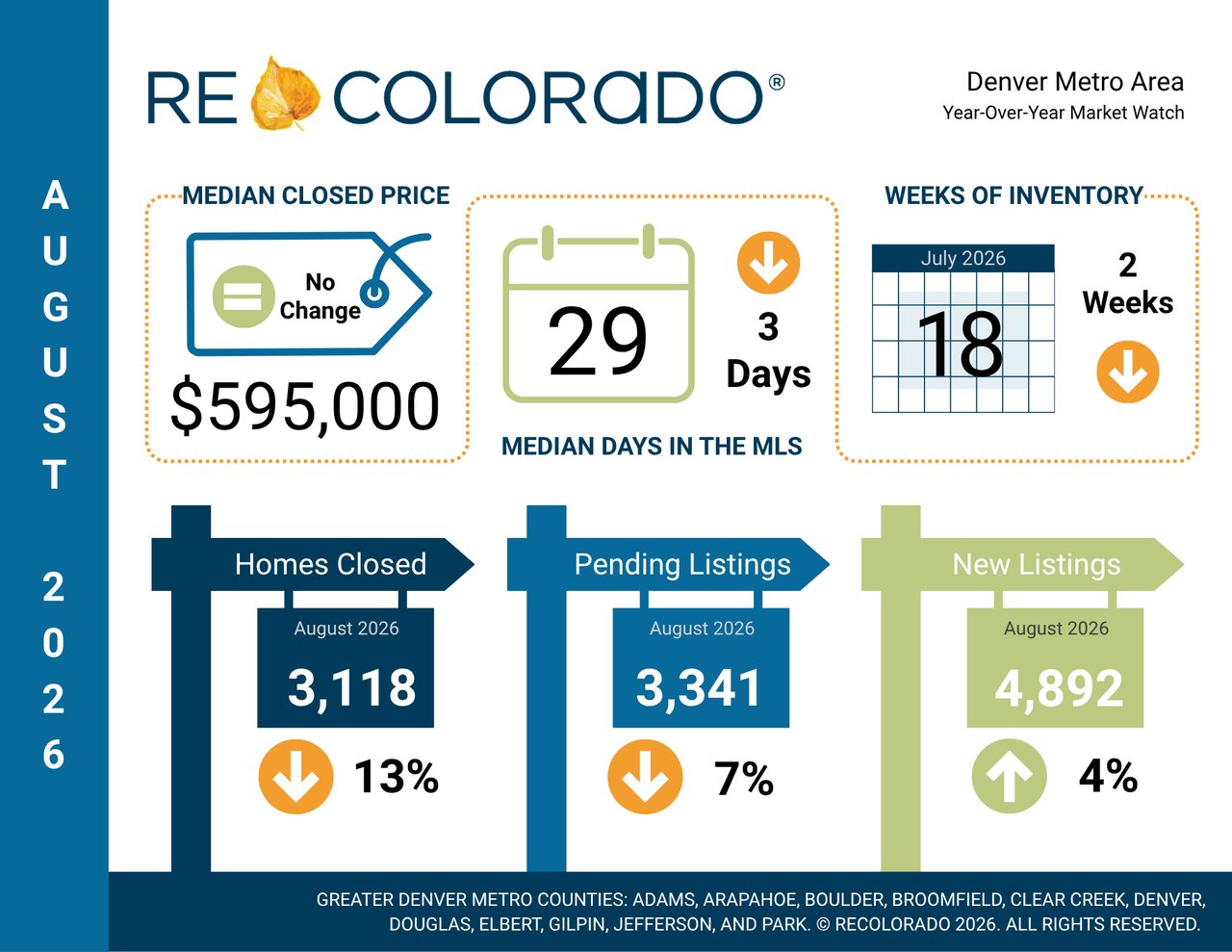
Denver's market has moved from that frenzy into something closer to equilibrium, and the shift shows up directly in how sewer findings get handled. As of July 2026, detached single-family homes in Denver carried a median price around $660,000 and were going under contract in about 17 days, a pace that still rewards a well-priced, move-in-ready home but no longer forces buyers to skip due diligence to compete for it. More than six in ten Denver sales that month included a seller concession, with the typical concession landing around $10,000, most often applied toward closing costs, a rate buydown, or exactly the kind of repair credit a sewer finding generates. Inventory sitting well above where it stood during the 2020 to 2022 stretch has given buyers something they did not have a few years ago: the standing to actually use the objection period instead of treating it as a formality.
That standing is what makes the sewer scope matter again. A finding that would have been buried under a stack of waived contingencies in 2021 now routinely turns into a real conversation about who pays, and how.
What this means if you are buying or selling in one of these blocks
If you are shopping in Baker, Capitol Hill, Park Hill, the Highlands, or either side of Washington Park, order the scope on day one of the inspection window, not day five. A seven to ten day window disappears fast once you are also coordinating a general inspection and a radon test, and a sewer scope report from a previous sale is not something to rely on. Root growth accelerates and pipes shift, so a report that is even two years old does not reflect today's condition.
If you are selling one of these homes, a pre-listing scope removes the biggest source of last-minute surprise from your own transaction. Buyers in this market have room to negotiate, and a seller who already knows what is in the ground, and has priced or disclosed accordingly, keeps far more control over the outcome than one who finds out for the first time from the buyer's inspector.
Income-qualified Denver homeowners facing a full lateral replacement also have a resource worth knowing about before assuming the repair bill has to come entirely out of pocket: the Denver Urban Renewal Authority runs a low-interest wastewater loan program aimed specifically at homeowners who need to repair or replace a failing sanitary sewer line.
A few questions that come up every time
Does a newer Denver home still need a sewer scope? Contractors who work these lines regularly still recommend one on new construction, since construction debris left in the pipe during the build is a more common finding than anyone expects, even when the pipe material itself is modern PVC.
What if the seller won't budge on a sewer finding? The contract gives the buyer the right to terminate and recover earnest money if the two sides cannot agree by the Resolution Deadline, so the leverage is real, but only if the objection was delivered in writing and on time.
Can I skip the scope to save money on an older home? Given that root intrusion and pipe bellies produce no visible symptoms until the line backs up completely, skipping the scope on a pre-1978 Denver home tends to be the single costliest shortcut a buyer can take in the entire inspection process.
If you are weighing a purchase in one of Denver's older neighborhoods, or trying to figure out what a sewer finding on your own listing is actually worth in today's market, Colorado Dream Properties can walk through the specifics with you. Request a free home valuation or property management quote and get a straight answer before you are staring down an inspection deadline.