House hacking can look like a shortcut to lower housing costs, but in Denver, it only works when the numbers and the rules line up. If you are hoping to offset your mortgage with a duplex unit, an ADU, or shared living space, you need a plan that fits the city’s zoning, permitting, and rental rules. This guide will show you the most practical ways to make house hacking work in Denver, what legal issues to watch, and how to think about neighborhoods, rent offsets, and financing. Let’s dive in.
Why Denver works for house hacking
Denver gives you a strong mix of renter demand and meaningful rent offsets. The citywide average apartment rent is $1,624 per month, with typical one-bedroom rents at $1,624 and two-bedroom rents at $2,131. Apartments.com also estimates that 55% of Denver residents are renters, which helps explain why central, transit-connected areas often draw the most rental interest.
For you as a buyer, that matters because house hacking depends on demand from people who want to rent part of the property you own and occupy. When rents are high enough to offset a chunk of your monthly payment, the strategy becomes much more realistic. In Denver, that can make the difference between stretching for a home and buying one with a built-in income plan.
Start with the right property type
Not every home is a good house-hack candidate. In Denver, the best fit usually comes down to three practical paths: duplexes, homes with ADU potential, and carefully structured shared living arrangements that stay within the city’s rules.
Duplexes offer the clearest setup
A duplex is often the most straightforward house-hack option because you live in one unit and rent the other. Denver defines a duplex as two dwelling units in one structure, and the zoning code allows duplexes in several districts, including S-RH, S-MU, M-RH, M-RX, M-CC, M-MX, and M-GMX. Some single-unit corner lots may also allow duplexes, depending on the parcel.
This setup is easier to understand because each unit is already separate. You are not trying to force a single-family layout into an income property. Instead, you are buying a property type that was designed to support two households under one roof.
ADUs create flexible income potential
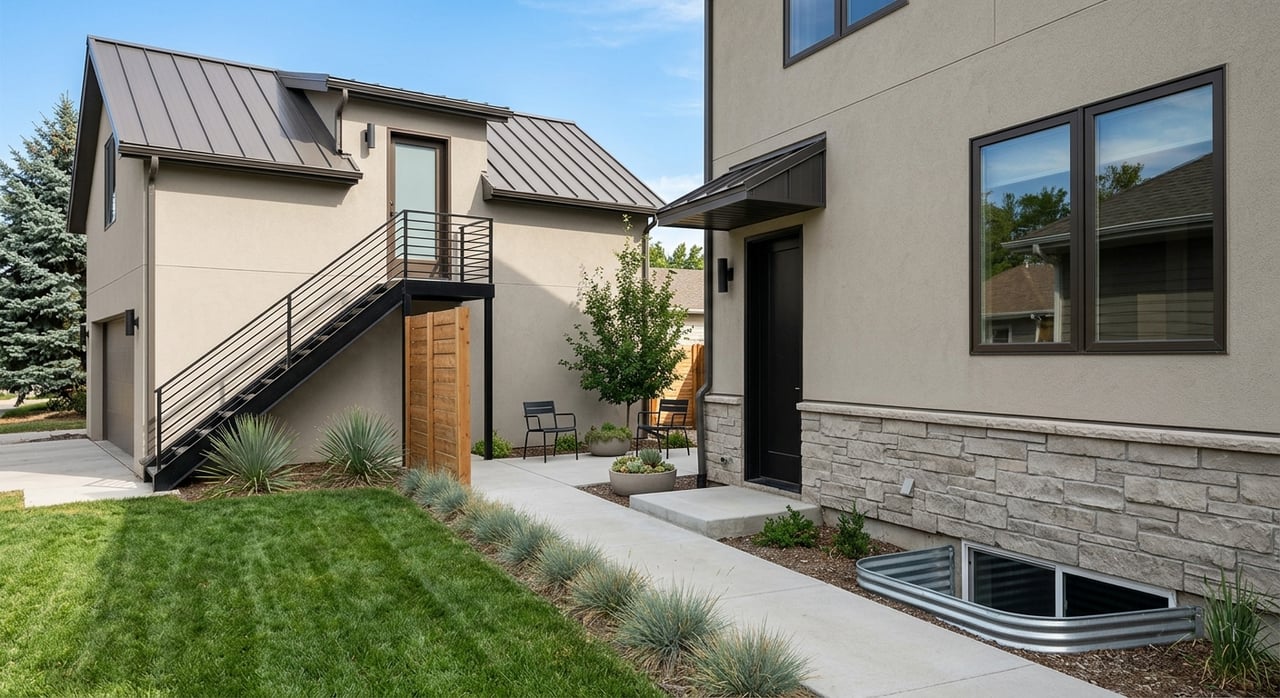
An accessory dwelling unit can be a strong value-add strategy if the lot and property can support it. Denver says an ADU is a self-contained smaller living space with its own kitchen, bathroom, and sleeping area, and it cannot be sold separately from the main property. ADUs can be detached, attached, above a garage, or created through a basement or attic conversion.
Denver’s citywide ADU measure took effect on December 16, 2024, expanding ADU access across all residential areas and about 70% of Denver land. Before that change, ADUs were allowed on about 36% of the city’s land. That shift makes ADUs much more relevant for buyers who want to create rental income over time.
The city also notes that state law HB 24-1152 requires ADUs in all residential districts and overrides HOA rules that prevent them. Even so, Denver says it does not review HOA rules, so you still need to check metro district and HOA bylaws before you assume a project is clear.
Roommate plans require extra care
Roommate house hacking can work in Denver, but only if it fits the city’s definition of household living. Denver defines household living as occupants who share a dwelling unit and household responsibilities. If you move into separate room leases or rent-by-the-room arrangements, the city classifies that as congregate living.
That distinction matters because congregate living is prohibited in single-unit and two-unit residential areas. So if your plan is to buy a home and lease bedrooms individually, you need to understand that the strategy may not be allowed where you want to buy. In Denver, this is one of the easiest ways for a house-hack plan to go sideways.
Check zoning before you shop
In Denver, zoning is not a side issue. It is one of the first things you should confirm before you get too attached to a property.
For duplexes, the key question is whether the parcel’s zone district and lot geometry allow the use. For ADUs, Denver’s zoning map helps identify residential and mixed-use commercial districts that allow them, and the city notes that some former Chapter 59 zones may allow them as well. If a property is in a historic district or is a designated landmark, design review may add a certificate of appropriateness step before permits are issued.
That means your buying process should include more than just touring homes and comparing prices. You also want to verify whether the property supports the strategy you have in mind now, and whether it could support the next step later, such as adding an ADU or converting space legally.
Understand permits and rental licensing
A workable house-hack plan is not just about buying the right home. It is also about following the city’s process once you own it.
Denver says single-family, duplex, and ADU projects go through building, zoning, and SUDP review. The city also requires a rental license if you rent out your property, whether that rental is long-term or short-term. That licensing requirement is easy to overlook, especially if you think of house hacking as simply sharing your home, but it still matters.
If you are considering improvements, conversions, or an ADU buildout, permit timing and project scope should be part of your budget from the start. A property can look great on paper and still become expensive if your approval path is more complex than expected.
Match the strategy to your financing
The right financing can make house hacking more accessible, especially if you want a low down payment or need rental-income flexibility. Several common owner-occupied loan options can support this kind of purchase.
- FHA loans can allow down payments as low as 3.5% on one- to four-unit properties.
- HomeReady can allow a 3% down payment and may consider boarder income and rental payments, including rental income from a subject-property accessory unit or from a two- to four-unit principal residence.
- Home Possible also offers 3% down and may allow rental income from a two- to four-unit primary residence as qualifying income.
- VA loans may allow eligible borrowers to buy a one- to four-unit property, occupy it, and in some cases avoid a down payment.
Denver-area buyers may also want to look at local assistance programs. The city says metroDPA can provide down payment assistance with no monthly payments or interest, and CHAC offers low-interest flexible loans plus down payment and closing-cost help for eligible first-time buyers.
The practical takeaway is simple: if you want to house hack, talk through financing early. The loan program you choose can affect what property type makes sense, how much cash you need up front, and whether projected rental income helps you qualify.
Use rent benchmarks the right way
Rent benchmarks are helpful, but they are only benchmarks. A neighborhood’s average apartment rent does not guarantee what your specific basement unit, ADU, or second unit will lease for.
Still, these numbers can help you compare opportunities across Denver. If your goal is monthly payment relief, it helps to know where rents are closer to or above the city average.
Neighborhoods with stronger offset potential
Berkeley stands out for higher directional rent potential, with average one-bedroom rents of $1,968 and two-bedroom rents of $3,041. That suggests stronger offset potential for a well-located ADU or two-unit property.
Five Points is also a solid candidate, with average one-bedroom rents of $1,662 and two-bedroom rents of $2,206. Those numbers sit around or above the city average and support the case for central-demand rental income.
West Colfax falls close to city averages, with one-bedroom rents at $1,640 and two-bedroom rents at $2,151. That makes it a practical middle-ground market for buyers looking at duplexes or ADUs without chasing the highest-price neighborhoods.
Neighborhoods that may fit different goals
Capitol Hill has average one-bedroom rents of $1,379 and average two-bedroom rents of $1,949. Those figures sit below or near the city average in the one-bedroom market, which may make the area a better fit for roommate-style or condo-style house hacking than for maximizing rent per square foot.
Barnum has an average rent of $1,357, and Barnum West is among Denver’s more affordable neighborhoods at $1,044 average rent. That makes this area more of an entry-affordability play than a maximum rent-offset play.
Consider live-in flips carefully
A live-in flip can also qualify as a house-hack style strategy if your goal is to improve the property while building equity. This can work best if you are comfortable living through renovations in exchange for a stronger long-term financial outcome.
For financing, FHA 203(k) can finance purchase or refinance plus rehabilitation for homes that are at least one year old, including single-family homes, single-family homes with eligible ADUs, and two- to four-family units. Fannie Mae’s HomeStyle Renovation can finance purchase or refinance with repairs and renovations on one- to four-unit principal residences.
In Denver, historic district or landmark status can add another layer if your renovation affects design-sensitive elements. In those cases, the city says design review may require a certificate of appropriateness before permits are issued.
Avoid the most common Denver mistakes
The biggest house-hacking problems in Denver usually come from legal fit, not the idea itself. Many buyers focus on future rent and forget to confirm whether the property, zoning, and occupancy structure actually support the plan.
Here are the most common issues to avoid:
- Buying before confirming zoning for a duplex or ADU strategy
- Assuming a roommate-by-the-room setup is allowed in a single-unit or two-unit area
- Overlooking HOA or metro district rules that may still affect the property
- Forgetting that Denver requires a rental license if you rent out the property
- Using neighborhood apartment averages as exact rent projections for a specific unit
- Underestimating permit timelines or historic review requirements
A strong Denver house-hack plan is usually the one that looks a little boring on paper. It is owner-occupied, zoning-aligned, conservatively underwritten, and realistic about permitting, licensing, and rent.
Build a plan before you buy
If you want house hacking to work in Denver, start with your end goal and work backward. Decide whether you want the clean separation of a duplex, the long-term upside of an ADU, or a shared-living approach that clearly fits household-living rules.
Then compare neighborhoods based on both purchase price and realistic rent offset. A lower-cost area may help you get in sooner, while a higher-rent area may produce stronger monthly income. Neither is automatically better. What matters is whether the property, financing, and city rules line up with your budget and comfort level.
Denver can absolutely work for house hacking, but the smart approach is local, specific, and compliance-first. If you want help evaluating properties, rental potential, or what ownership could look like after closing, Colorado Dream Properties can help you think through both the purchase side and the long-term management picture.
FAQs
What is the best house hacking setup in Denver?
- For many buyers in Denver, a duplex is the clearest setup because you can live in one unit and rent the other, but ADUs can also be a strong option when zoning, lot conditions, and permits support the plan.
Are ADUs allowed on Denver residential properties?
- Denver’s citywide ADU measure took effect on December 16, 2024, and the city says ADUs are now allowed in all residential areas and on about 70% of Denver land, though site conditions, permits, and local bylaws still matter.
Can you rent out bedrooms in a Denver house hack?
- You may be able to share a home under Denver’s household-living rules, but separate room leases or rent-by-the-room arrangements are classified as congregate living, which is prohibited in single-unit and two-unit residential areas.
Do you need a rental license for house hacking in Denver?
- Yes. Denver says a rental license is required if you rent out your property, whether the rental is long-term or short-term.
Which Denver neighborhoods have better rent-offset potential for house hacking?
- Based on apartment-market averages, Berkeley, Five Points, and West Colfax offer stronger directional rent-offset potential than lower-rent areas, while places like Barnum may be more attractive for entry affordability.
Can low-down-payment loans work for a Denver house hack?
- Yes. FHA, HomeReady, Home Possible, and VA financing can all support owner-occupied house-hack strategies, depending on your eligibility and the property type you buy.