What does the Town of Castle Rock actually collect from a median-priced home in annual property tax? Not the county, not the school district, not whatever quasi-governmental entity might sit inside your subdivision. Just the Town itself, the one with the police department, the fire crews, the parks, the water utility, the whole apparatus most people assume their property tax is paying for.
The answer, according to the Town's own budget documents, is $39.15 for the entire year of 2025 on a home valued at $635,119. Not a typo. Less than the cost of a tank of gas, for a full year of municipal services.
That number matters for anyone comparing homes in Castle Rock right now, because it flips the usual assumption. Buyers tend to think of "Castle Rock taxes" as a single figure attached to the town's name. It isn't. The Town barely shows up on the bill. Almost everything you actually pay, and almost everything that varies from one subdivision to the next, comes from somewhere else: Douglas County, the school district, and in a growing number of Castle Rock neighborhoods, a metropolitan district you've probably never heard of until your lender runs the numbers.
The number the portals don't agree on, and why it doesn't matter as much as you think
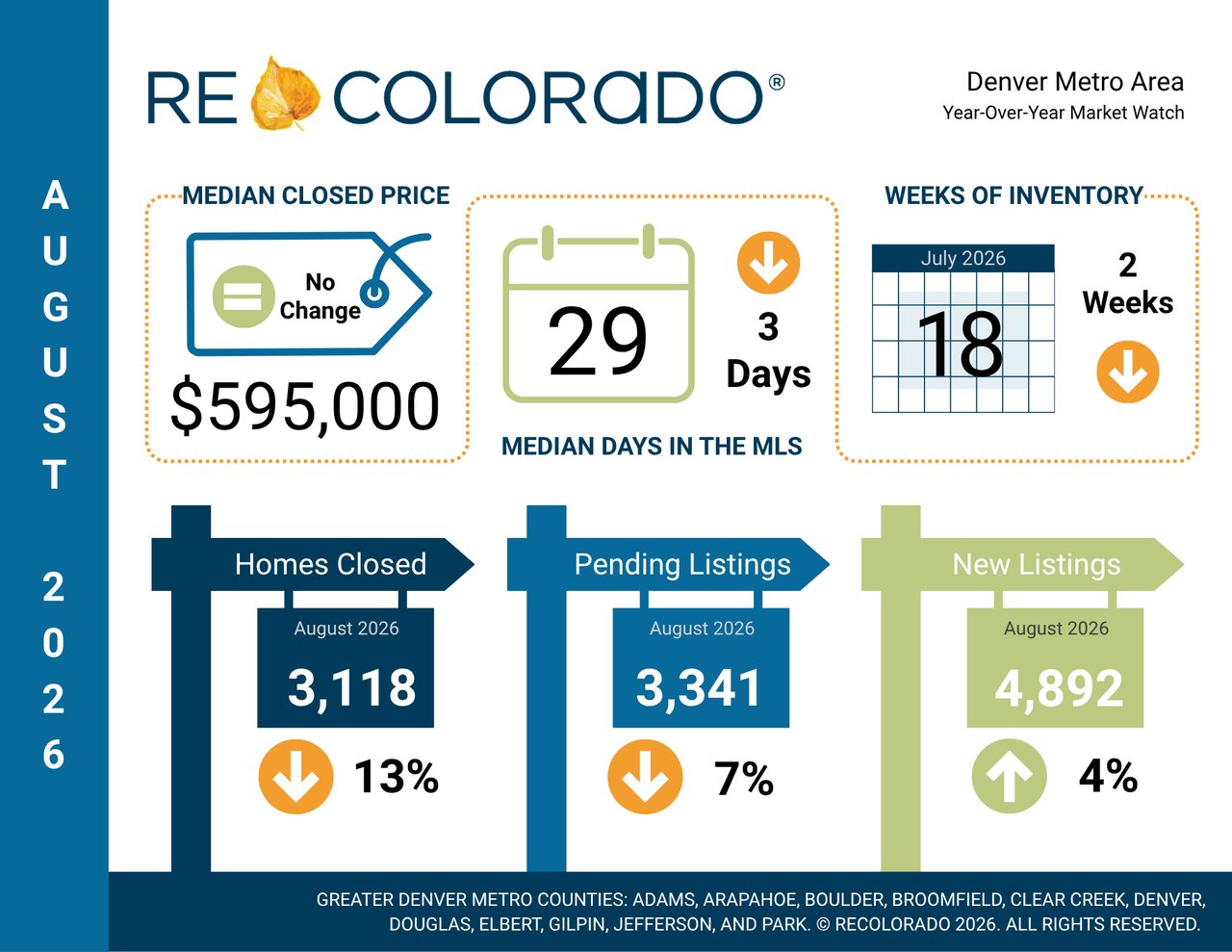
Even the headline price is unstable right now. Three-month figures through May 2026 put Castle Rock's median sale price at $647,000, down 3.4 percent from the same period a year earlier. Other trackers put the median closer to $635,500 for the same general window, while list-price data for August 2026 shows a median asking price of $773,000. That's a spread of more than $125,000 across sources looking at the same town in the same season.
Buyers often treat that kind of number as the thing to solve for. Get the price right, get the mortgage right, done. But the metro district math sitting underneath the price is often a bigger swing factor between two Castle Rock listings than the difference between any two of those median figures. A $700,000 home in one subdivision can carry a metro district tax line several thousand dollars a year higher than an identically priced home a few miles away, and neither the listing price nor the HOA dues will tell you that.
What a metro district actually does, and why Castle Rock has so many
A metropolitan district is a special taxing entity formed under Colorado's Title 32, created by a developer to finance roads, water lines, sewer systems, and parks before a subdivision has any residents to pay for them. The district issues bonds, builds the infrastructure, and then repays the debt through a dedicated mill levy charged to every home inside its boundaries, often for 20 to 40 years. It sits on your tax bill as its own line, separate from your HOA dues and separate from the Town of Castle Rock's own tiny take.
The Town of Castle Rock's own FAQ page is direct about this: metro district mill levies "vary widely throughout Castle Rock," and the Town publishes a report showing exactly how much. That variance is the story. Here's roughly what it looks like translated into an annual dollar figure on a $700,000 home, using the standard Colorado assessment formula applied to each district's published 2024 mill levy:
| Metro District | 2024 Mill Levy | Estimated annual cost on a $700,000 home* |
|---|---|---|
| The Meadows (fixed by bond terms, cannot rise) | 35 mills | About $1,640 |
| Canyons Metro District No. 2 | 71.73 mills | About $3,360 |
| Dawson Trails (Districts 1 through 7) | 74.044 mills | About $3,470 |
| Crowfoot Valley Ranch No. 2 | 80.47 mills | About $3,770 |
| Founders Village | 94.56 mills | About $4,440 |
*Metro district line only, calculated from the published mill levy and the standard residential assessment rate. County, school, fire, and library mills apply on top of this for every property in Castle Rock and vary far less by subdivision than the metro district line does.
That's a spread of roughly $2,800 a year between the least and most expensive district on this list, for homes priced the same. Founders Village's own combined mill levy, once county and school authorities are layered on top of its metro district line, clears 164 mills total, among the highest effective rates in Douglas County.
Two neighborhoods, two very different reasons for a high bill
The Meadows and Founders Village both carry legacy debt from the 1980s, but the story behind each is different, and the difference matters if you're thinking about how long you plan to own the home.
The Meadows financed its original infrastructure with about $57 million in bonds issued by seven metro districts in the mid-1980s. Slower-than-projected build-out forced a 1993 restructuring, and decades later, not one dollar of the original principal has been paid down. The obligation has grown to roughly $454 million against those original bonds. The mill levy itself is capped at a fixed 35 mills that cannot be raised under the current bond agreements, which is actually lower than several newer districts on the list above. But the debt behind that levy is far larger, and residents don't know yet whether the balance gets restructured before a 2029 interest-stop date forces a reckoning.
Founders Village's governing district petitioned for Chapter 9 bankruptcy protection in 1989, after its original 1985 bond issue collapsed alongside the broader savings and loan crisis, and the court-approved restructuring plan was finalized in December 1991. That plan raised the mill levy in stages, and under its terms, the district's levy is exempt from certain statewide taxpayer protections that apply elsewhere. The Founders Village Metropolitan District's own FAQ confirms the current levy sits at 87.314 mills as adjusted under that plan, with other reporting on the district's 2024 collection year putting it at 94.56 mills, the highest single metro district levy in Douglas County. The upside, if there is one: the district's bond debt is on track for discharge in 2031, after which residents would see a meaningful drop.
Neither of these numbers appears on a listing sheet. Both are knowable before you write an offer.
Dawson Trails and the incentive nobody mentions at the open house
South Castle Rock's newest large-scale development tells a different version of the same story, and it comes with an incentive structure worth understanding. Dawson Trails is a roughly 2,000-acre project anchored by an incoming Costco and a new interchange connecting Crystal Valley Parkway to Interstate 25. The Town approved an amended service plan for the project in September 2022 authorizing seven metro districts to carry an aggregate $1.06 billion in debt, serving 5,850 approved homes plus 3.2 million square feet of commercial space. Each district currently levies 74.044 mills.
Buried in that service plan is a detail that explains why these structures keep getting approved: five mills of that levy are remitted directly to the Town of Castle Rock every year debt service is collected. The Town isn't just permitting the district, it's collecting a share of the proceeds for as long as the bonds are outstanding. That doesn't make the arrangement improper. Metro districts let infrastructure get built years or decades sooner than a town budget could manage on its own, and the Colorado Association of Home Builders has estimated that paying for that infrastructure upfront can add $30,000 to $40,000 to a new home's price. But it does mean the Town has a financial stake in the district's continuation, which is worth knowing if you're weighing how long that 74-mill levy is likely to stick around.
How to actually check before you write an offer
Colorado law already requires part of this disclosure. For any residential sale in a metropolitan district organized on or after January 1, 2000, the seller must provide the buyer with the district's official website. That's a floor, not a full picture, and it only tells you the district exists, not what it will cost you next year.
Three things worth doing before you compare two Castle Rock listings on price alone:
Pull the parcel's specific mill levy from the Douglas County Assessor's published tax district table rather than assuming based on the subdivision name. Districts inside the same general area, like the Meadows or Dawson Trails, can carry multiple numbered sub-districts with different levies.
Ask whether the metro district's mill levy is fixed by bond terms, like The Meadows, or subject to annual adjustment, like Founders Village. A fixed levy is more predictable even if the underlying debt situation is more uncertain.
Remember that the metro district tax and the HOA are two entirely separate systems, run by separate boards, funded through separate mechanisms. A well-run HOA says nothing about the metro district's financial health, and vice versa.
FAQ
Does my HOA fee cover the metro district tax? No. The metro district tax appears as its own line on your county property tax bill, paid alongside county and school levies. HOA dues are billed separately and typically fund community amenities and landscaping, not infrastructure debt.
Can a metro district raise its mill levy after I buy? It depends on the district's service plan. Newer districts formed since certain statutory reforms often cap the debt-service mill levy at 50 mills, though they can layer additional mills for operations on top. Older districts like Founders Village and The Meadows operate under bankruptcy-era agreements with their own specific terms, which is why their levies look different from newer subdivisions.
What happens once a district's bonds are paid off? The mill levy is expected to drop substantially. Founders Village's bond debt is on track for discharge in 2031, and district communications indicate a significantly lower levy would follow.
Comparing homes in Castle Rock means comparing more than square footage and list price. If you're weighing two subdivisions and want the actual parcel-level tax picture before you write an offer, reach out to Jeff Kroll at Colorado Dream Properties and request a free home valuation. We'll walk the numbers with you, mill levy included.